Miguel Gutierrez
California, USA
Interdisciplinary
Artist in Residence, 2026
↗ http://miguelgutierrez.org/
Artist Statement
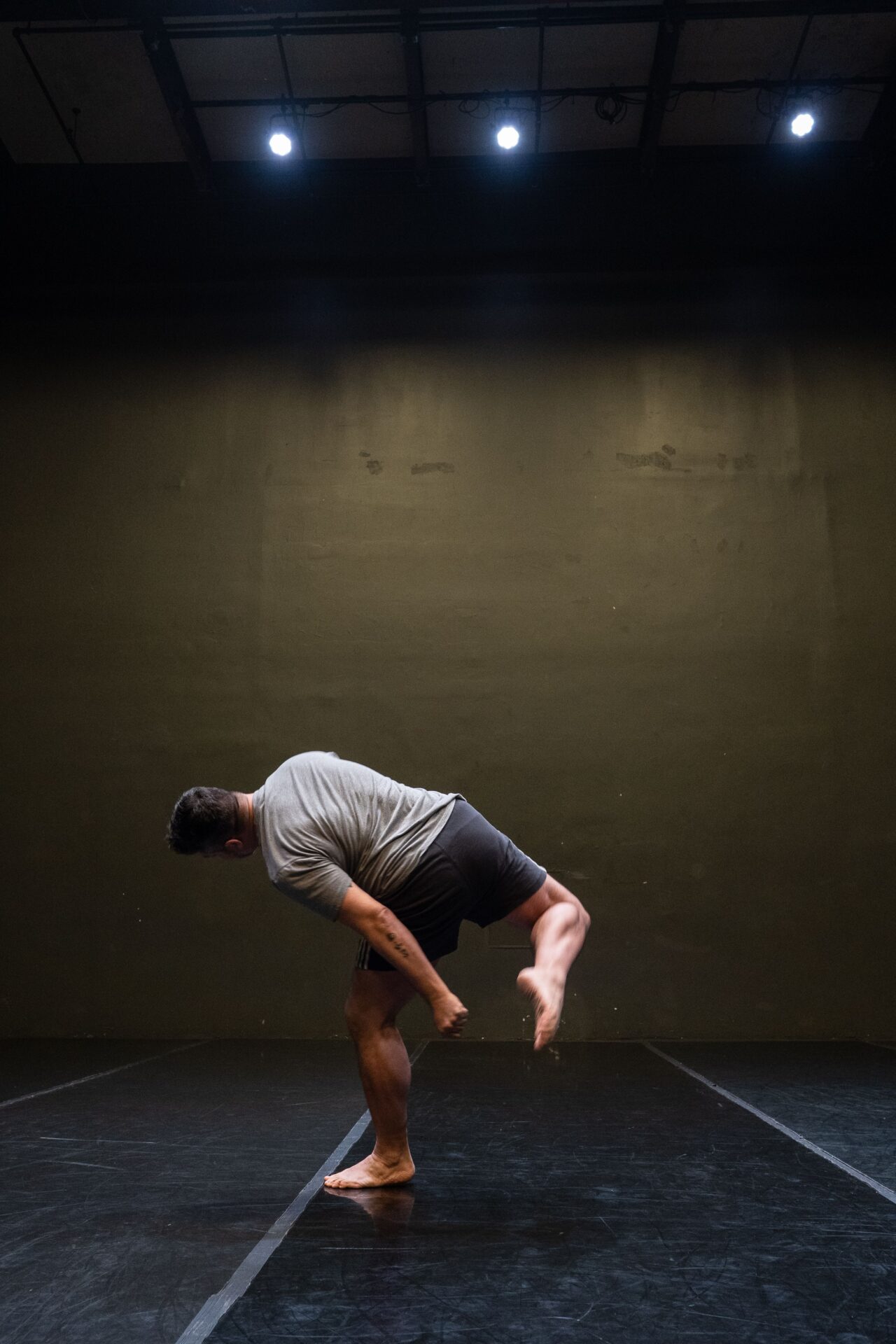
I identify first and foremost as a person who makes. I make dances, music, drawings, and I write. My desire to create things is an obsession that keeps me alive and engaged in this challenging world. I find comrades along the path and we build things together, in conversation with each other, and in support of each other, to assert imaginative possibilities using poetic sauciness, political savvy, irreverence, rawness, and honesty as strategies and textures. I am honored to be part of a legacy of process-focused experimental artists, truth-telling queers and POC folx who take issue with propriety, because our lives exist beyond polite speech. I am a middle-aged queer who grew up as the child of Colombian immigrants. These intersections gave me insight into the absurdity of hierarchical structures, and I find ways to ignore, poke, stab, re-arrange, question, and laugh at them in my work. Each piece I make is about something and is a thing itself. My interests are vast: my father’s neurological illness and death, ghostliness, the limits of representation for racialized bodies, queer kinship and desire, what happens in the in-between, my roiling relationship to identity, grief, and how to make art for the end of the world.
While at Headlands
I am interested in a residency at Headlands to begin working on a new project inspired by what will be my first sabbatical as a professor at UCLA. During my sabbatical I will travel to several countries in Latin America and the Caribbean to familiarize myself with their dance and performance communities, to learn about the kind of work artists are currently making there, and to identify what the financial conditions are for developing work. My desire is to re-direct the Eurocentric focus that much of my touring career has had to a region that aligns with my identity as a queer, Latinx artist and son of immigrants from Colombia. The countries and territories I’m traveling to are Uruguay, Chile, Argentina, Brazil, Peru, Colombia, Cuba and Puerto Rico. How has the history of colonialism impacted the artists’ work in these many places? How do political and economic forces shape the kind of work they make? What are the current aesthetic trends and what influences them? How does capital and its many intra and inter-national movements shape the opportunities that artists have?